
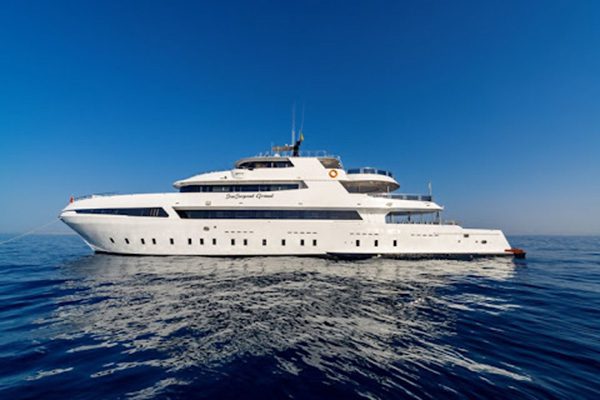

Top Liveaboard Routes from Marsa Alam: Your Guide to the Deep South
Marsa Alam, or more specifically its modern marina, Port Ghalib, is not just a destination for laid-back shore diving; it is the unrivalled gateway to the most spectacular, pristine, and adrenaline-pumping dive sites the Egyptian Red Sea has to offer. The very best of the Deep South, with its strong pelagic currents and remote coral gardens, is only truly accessible via a liveaboard safari departing from Marsa Alam.
Liveaboards typically last 7 nights/8 days and offer an intensive diving experience, often including up to 3 to 4 dives per day. These voyages are often reserved for certified divers (minimum PADI Open Water with a decent number of logged dives, and usually Advanced Open Water for the most exposed routes).
Here are the top three legendary liveaboard routes starting from Marsa Alam.
1. The Marine Parks: BDE (Brothers, Daedalus, Elphinstone)
Often called the “Golden Triangle,” the BDE route is the most famous and highly sought-after itinerary for experienced divers focusing on big pelagic encounters. It is a demanding route designed for certified divers comfortable with open-ocean conditions and strong currents.
Dive Sites and Highlights:
- Brothers Islands (Big & Little Brother): Isolated pinnacles famous for their vertical walls, stunning soft coral coverage, and frequent sightings of Oceanic Whitetip Sharks, Thresher Sharks, and Hammerheads. Big Brother also hosts two historic wrecks: the Aida II and the Numidia, both heavily encrusted with corals.
- Daedalus Reef: Recognized by its distinct lighthouse, this massive, isolated reef is a sheer wall plunging hundreds of meters deep. Divers regularly encounter large schools of Hammerhead Sharks (especially in the summer months), Grey Reef Sharks, and massive schools of tuna and barracuda.
- Elphinstone Reef: A true Red Sea legend, this finger-shaped reef is close enough to shore for day trips from Marsa Alam, but its best moments are often saved for early morning liveaboard dives. It’s famed for its north and south plateaus, dramatic walls, and frequent oceanic whitetip shark sightings.
The Vibe:
Adrenaline-focused and Pelagic-rich. This route involves significant open-water sailing and is all about witnessing the large predators of the open ocean. It requires an Advanced Open Water certification and typically a minimum of 50 logged dives due to the challenging nature of the exposed sites.
2. The Deep South: St. John’s Reefs & Fury Shoals
The St. John’s route is a highly diverse and visually spectacular safari, offering a contrast of huge pinnacles, cavern systems, and pristine coral gardens. It is perfect for photographers, macro enthusiasts, and divers who love complex, healthy reef structures over consistent pelagic action.
Dive Sites and Highlights:
- St. John’s Reefs: Located close to the border with Sudan, this massive cluster of reefs (covering over 290 sq km) offers some of the most vibrant and varied diving in Egypt.
- St. John’s Caves (Umm Kharalim): Famous for intricate tunnels, swim-throughs, and caverns where rays of light filter down, creating a photographer’s dream.
- Habili Ali / Habili Gafaar: Deep, isolated pinnacles bursting with soft corals and schools of reef fish.
- Fury Shoals: A huge chain of stunning, protected reef formations closer to Marsa Alam than St. John’s.
- Sha’ab Claudio: Known for its vast, light-filled cave systems (non-penetration, open-to-the-surface).
- Sataya Reef (Dolphin House): A massive, horseshoe-shaped reef famous for a large, resident pod of Spinner Dolphins, providing an incredible opportunity for a regulated snorkeling or diving experience.
- Sha’ab Maksur: Often compared to Elphinstone, featuring a sheer drop-off and plateau.
The Vibe:
Photographer’s Paradise and High Coral Health. This route offers the best blend of sheltered lagoons, stunning reef architecture, and exceptional coral vitality. It generally requires less experience than the BDE route, though the offshore sites still demand comfort and competence.
3. The Far South Expedition: Rocky, Zabargad, & St. John’s
This route is the most remote and specialized, offering a true expedition into the final frontier of Egyptian diving. It targets the isolated islands near the very edge of Egypt’s territorial waters.
Dive Sites and Highlights:
- Rocky Island: A small, isolated reef island known for its steep walls and exposure to strong currents. This exposure attracts a huge variety of large pelagics, with guaranteed encounters of various shark species, including silvertips and reef sharks.
- Zabargad Island: A larger, volcanic island that features a unique, shallow lagoon with sandy steps and one of the Red Sea’s most intriguing wrecks: the ‘Russian Spy Ship’ or other historical vessels lying in its protected waters. The coral gardens are pristine and host large populations of turtles.
- Extended St. John’s Exploration: This itinerary dedicates more time to the deeper, more remote pinnacles of the St. John’s system that are often rushed on other routes.
The Vibe:
Remote, Exclusive, and Expeditionary. This is the route for divers who have “done” the classic sites and are seeking the least-visited reefs in the Egyptian Red Sea. It is highly seasonal and weather-dependent due to the extreme southern and exposed location.
Ready for Departure from Marsa Alam (Port Ghalib)
All these itineraries typically embark and disembark from Port Ghalib Marina, which is located just a 10-minute drive from Marsa Alam International Airport (RMF). Liveaboards are considered the gold standard for Red Sea diving, as they allow divers to access these protected, offshore marine parks that are otherwise impossible to reach via day boats, delivering up to 20 dives over a single week.
0 Comment