
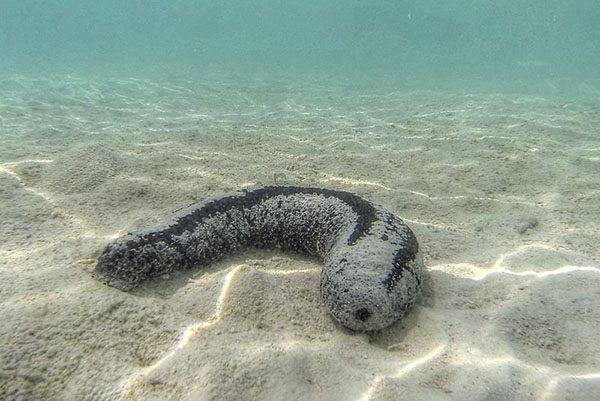

The Ocean’s Vacuum Cleaners: Ecology & Importance of Sea Cucumber (Holothuroidea) in Marsa Alam
In the crystal-clear waters of Marsa Alam, every creature, no matter how small or unassuming, plays a vital role in the health and balance of the Red Sea’s marine ecosystem. Among the most crucial, yet often underestimated, are the Sea Cucumber (Holothuroidea). These cylindrical echinoderms are the unsung heroes of the seafloor, acting as the “ocean’s vacuum cleaners” or “earthworms of the sea,” meticulously processing sediments and contributing significantly to the health of the entire reef environment. Understanding the profound ecological importance of Holothuroidea in Marsa Alam is key to appreciating the interconnectedness of all marine life. Sambo Divers Marsa Alam is dedicated to exploring and protecting these essential contributors to the underwater world.
Ecosystem Engineers: The Unique Ecology of Sea Cucumber (Holothuroidea)
Sea cucumbers are fascinating for their unique adaptations and the disproportionately large impact they have on their habitats:
- Deposit Feeding (Bioturbation): Their most significant ecological role is as deposit feeders. Using their specialized oral tentacles, they continuously ingest vast quantities of sand, mud, and detritus from the seafloor. They then digest the organic matter (algae, bacteria, decaying detritus) within the sediment and expel the cleaned, processed sand. This continuous processing of sediment is called bioturbation.
- Nutrient Cycling: This process helps to aerate and oxygenate the seafloor sediments, preventing the buildup of harmful anaerobic conditions. It also releases trapped nutrients back into the water column, making them available for other organisms, effectively recycling materials within the ecosystem.
- Sediment Health: By preventing the accumulation of organic matter, sea cucumbers help maintain healthy sediment environments, crucial for seagrass beds, infauna (organisms living within the sediment), and overall reef stability.
- Unique Defense Mechanisms: Sea cucumbers are relatively slow-moving and lack spines or prominent arms for defense. Instead, they have evolved some truly bizarre and effective defense mechanisms:
- Evisceration: When severely stressed or attacked, some species can dramatically expel their internal organs (such as their respiratory trees or digestive tract) through their anus. These expelled organs can be sticky, toxic (Cuvierian tubules), or serve as a distraction to predators. Remarkably, the sea cucumber can then fully regenerate these lost organs, sometimes within weeks.
- Toxins (Holothurin): Many species produce potent, saponin-like toxins called holothurins, which can be harmful or even lethal to fish and other potential predators. These toxins also make them unpalatable to most creatures.
- Camouflage: Many species rely on excellent camouflage, blending seamlessly with their sandy or rocky surroundings to avoid detection.
- Respiration: Unlike fish that use gills, sea cucumbers respire using a unique internal system called “respiratory trees,” which are branching tubes located near their anus. They draw water in through the anus and circulate it through these trees to extract oxygen.
- Reproduction: Sea cucumbers typically reproduce sexually through broadcast spawning, releasing eggs and sperm into the water column. Fertilized eggs develop into free-swimming larval stages before settling onto the seabed. Some species can also reproduce asexually through fission, where an individual simply splits into two.
Threats and Conservation Challenges in Marsa Alam
Despite their ecological importance and often cryptic nature, sea cucumbers face significant global threats, primarily due to human activities:
- Overfishing: In many parts of the world, sea cucumbers are highly prized as a delicacy, particularly in Asian markets (known as “trepang” or “bêche-de-mer”). This has led to severe overfishing and depletion of populations globally, with many species now listed as endangered or vulnerable. While commercial harvesting might not be as prevalent or uncontrolled within Marsa Alam’s protected waters, the global demand can indirectly affect Red Sea populations.
- Habitat Degradation: As bottom-dwellers, they are vulnerable to habitat destruction caused by destructive fishing practices (e.g., trawling), coastal development, sedimentation, and pollution that degrades the seafloor environment.
- Climate Change: Changes in ocean temperature and ocean acidification can also negatively impact sea cucumber populations, affecting their physiology, reproduction, and food sources.
Sambo Divers Marsa Alam: Protecting the Ocean’s Unsung Heroes
The Sea Cucumber (Holothuroidea) in Marsa Alam, though not as charismatic as a dolphin or a clownfish, is an indispensable force for good in the Red Sea’s marine ecosystem. Sambo Divers Marsa Alam is committed to their preservation:
- Promoting Respect: We educate our divers on the vital, often unseen, role of sea cucumbers, fostering respect for these unique creatures.
- “No Touch” Policy: We strictly enforce the “look, don’t touch” rule for all marine life, emphasizing that disturbing a sea cucumber can stress it and trigger its unique defensive mechanisms.
- Environmental Awareness: By highlighting the importance of sediment health and nutrient cycling, we encourage divers to be mindful of their impact on the entire seafloor environment.
- Supporting Conservation: By operating sustainably and encouraging responsible interactions, Sambo Divers contributes to the overall health of Marsa Alam’s marine park and its intricate web of life.
To witness the quiet, diligent work of the Sea Cucumber (Holothuroidea) in Marsa Alam is to gain a deeper understanding of the Red Sea’s complex and awe-inspiring marine world. Join Sambo Divers Marsa Alam for an enriching dive experience, where you can safely appreciate these “ocean’s vacuum cleaners” and contribute to their ongoing protection.

0 Comment